IS 2705 vs IEC 61869-2: Key Differences in Current Transformer Standards
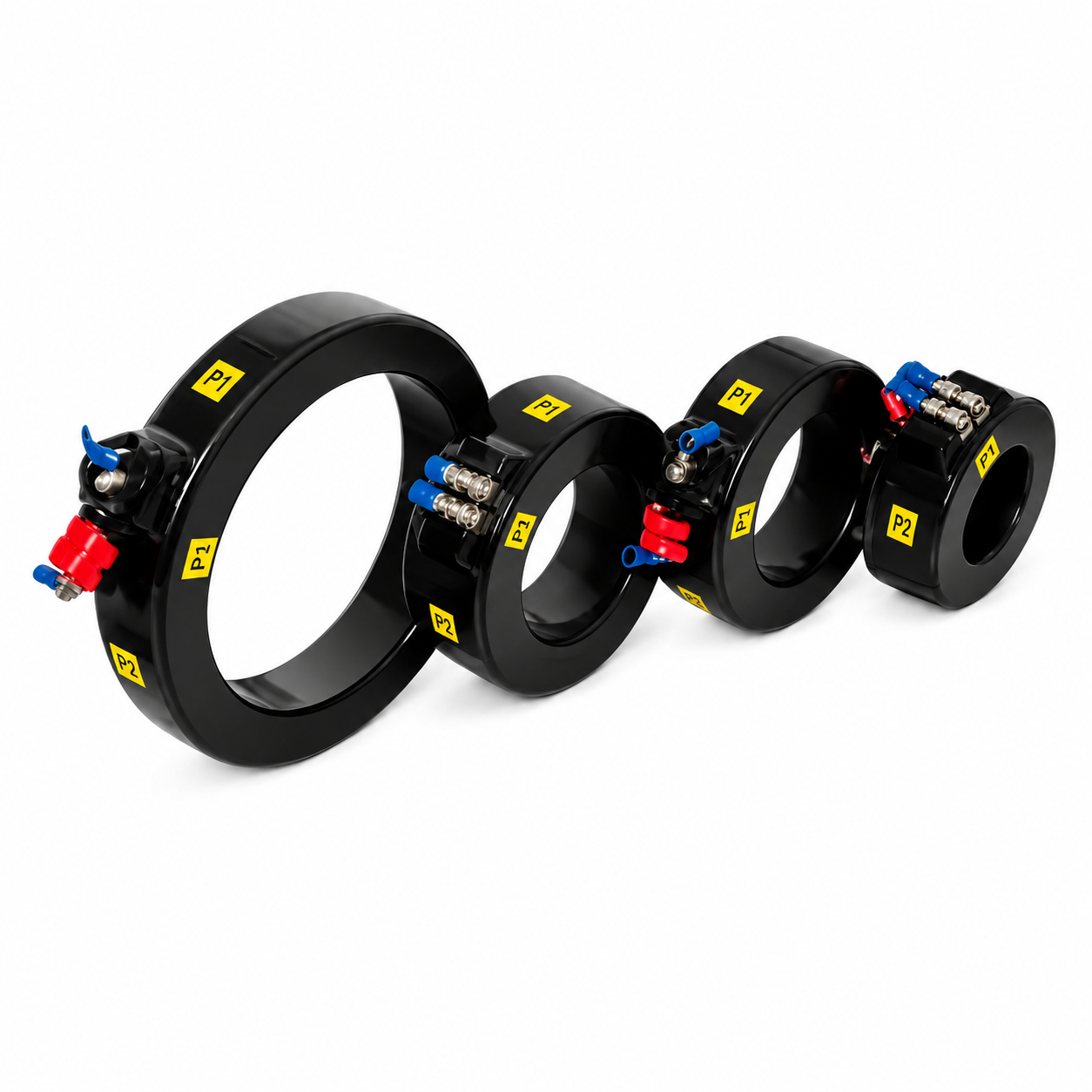
For decades, the Indian electrical industry manufactured and tested current transformers (CTs) strictly in accordance with IS 2705 (Parts 1 to 4). However, as Indian electrical infrastructure integrates with international grids, and manufacturing exports expand, the Bureau of Indian Standards (BIS) and power utilities like PowerGrid, NTPC, and state discoms are increasingly adopting IEC 61869-2.
In this article, we outline the fundamental differences between IS 2705 and IEC 61869-2, and how these changes impact design, compliance, and testing for switchgear and electrical panels.
1. What are these Standards?
- IS 2705: Originally published in the 1960s and updated in 1992, IS 2705 is the traditional Indian Standard governing current transformers.
- IEC 61869-2: Part of the IEC 61869 series launched in 2012, this standard is a global harmonization effort that replaced the older IEC 60044-1 standard. It modernizes definition metrics for instrument and protection transformers.
2. Key Structural Comparisons
While both standards cover the same physical equipment, they diverge in definitions, test procedures, and accuracy class evaluations.
A. Core Classification and Terminology
One of the most notable differences lies in how special application cores (like differential and restricted earth fault protection) are designated:
- IS 2705 Part 4 defines these as Class PS (Protection Special) current transformers, defined by Knee Point Voltage (Vk) and exciting current (Ie).
- IEC 61869-2 replaces this nomenclature with Class PX (and Class PXR). The parameters defining the cores are mathematically aligned, but the testing conventions are harmonized globally.
B. Accuracy Classes and Limits
Both standards specify similar accuracy limits for metering CTs (Class 0.1, 0.2, 0.2S, 0.5, 0.5S, 1.0, 3.0, 5.0). However, the definition of composite error and phase displacement is defined more strictly under IEC:
- IEC 61869-2 introduces a strict requirement for checking CT accuracy at 120% of rated current for all metering classes, ensuring high linearity even during mild overload conditions.
- IS 2705 focuses limits primarily on the 100% and 120% marks, with less stringent interpolation points at lower currents (e.g. 5% and 20%).
| Standard | Metering Verification Range | Key Protection Classes | Special Class designation |
|---|---|---|---|
| IS 2705 | 5% to 120% | 5P10, 5P20, 10P10, 10P20 | Class PS |
| IEC 61869-2 | 5% to 120% (plus extended load options) | 5P, 10P, PX, PXR | Class PX / PXR |
3. Knee Point Voltage (Vk) and Excitation Curves
For protection and differential cores, the Knee Point Voltage calculation is crucial to prevent protection blindspots during short circuits.
- Under IS 2705, the knee point is defined as the point on the excitation curve where a 10% increase in secondary voltage results in a 50% increase in exciting current.
- Under IEC 61869-2, the definition is identical in mathematical concept, but the measurement guidelines require additional validation points. The excitation curve must show complete compliance with magnetization properties up to the saturated zone, limiting excitation deviations during transients.
4. Insulation Levels & Dielectric Tests
IEC 61869-2 takes a more modern approach to insulation coordination based on system operating voltages. For indoor low-voltage (LT) panels:
- Dielectric Power Frequency Tests: IEC 61869-2 mandates a power frequency withstand test of 3 kV AC for 1 minute on secondary windings to earth, whereas IS 2705 traditionally specified 2 kV AC.
- Impulse Testing: IEC specifies precise lightning impulse withstand voltages for primary windings based on the equipment's rated insulation level (Um), ensuring high surge resilience in modern grids.
5. Why Specify IEC 61869-2?
Engineers at switchgear companies and B2B panel builders are moving to IEC 61869-2 for three main reasons:
- Global Export Readiness: Products built to IEC 61869-2 can be integrated into panels exported to the Middle East, Southeast Asia, and Europe without requiring re-certification.
- Harmonized Utility Standards: Indian public sector undertakings (PSUs) like PowerGrid have updated their technical specifications to mandate IEC 61869-2 compliance for all substations.
- Digital Integration: Modern smart meters and numerical relays require highly linear signal inputs, which are guaranteed by the tighter transient parameters of the IEC standard.
Summary: Designing for Compliance
When specifying current transformers for new projects, refer to this guidelines checklist:
- For local commercial and industrial projects, standard IS 2705 Class 0.5 / 1.0 remains widely accepted and cost-effective.
- For utility sub-stations, PowerGrid projects, and international exports, specify IEC 61869-2 Class 0.2S / 0.5S for metering, and Class 5P20 / PX for protection.
At our ISO 9001:2015 certified facility in Chandigarh, Alliance Engineering manufactures current transformers that are fully compliant with both IS 2705 and IEC 61869-2 standards. We routine-test every unit in-house to verify accuracy curves and knee-point voltages before dispatch. Contact our sales engineers at info@allianceengineeringco.com for drawing validation and engineering support.