The Role of Automatic Float-Cum-Boost Battery Chargers (FCBC) in Substation Backup
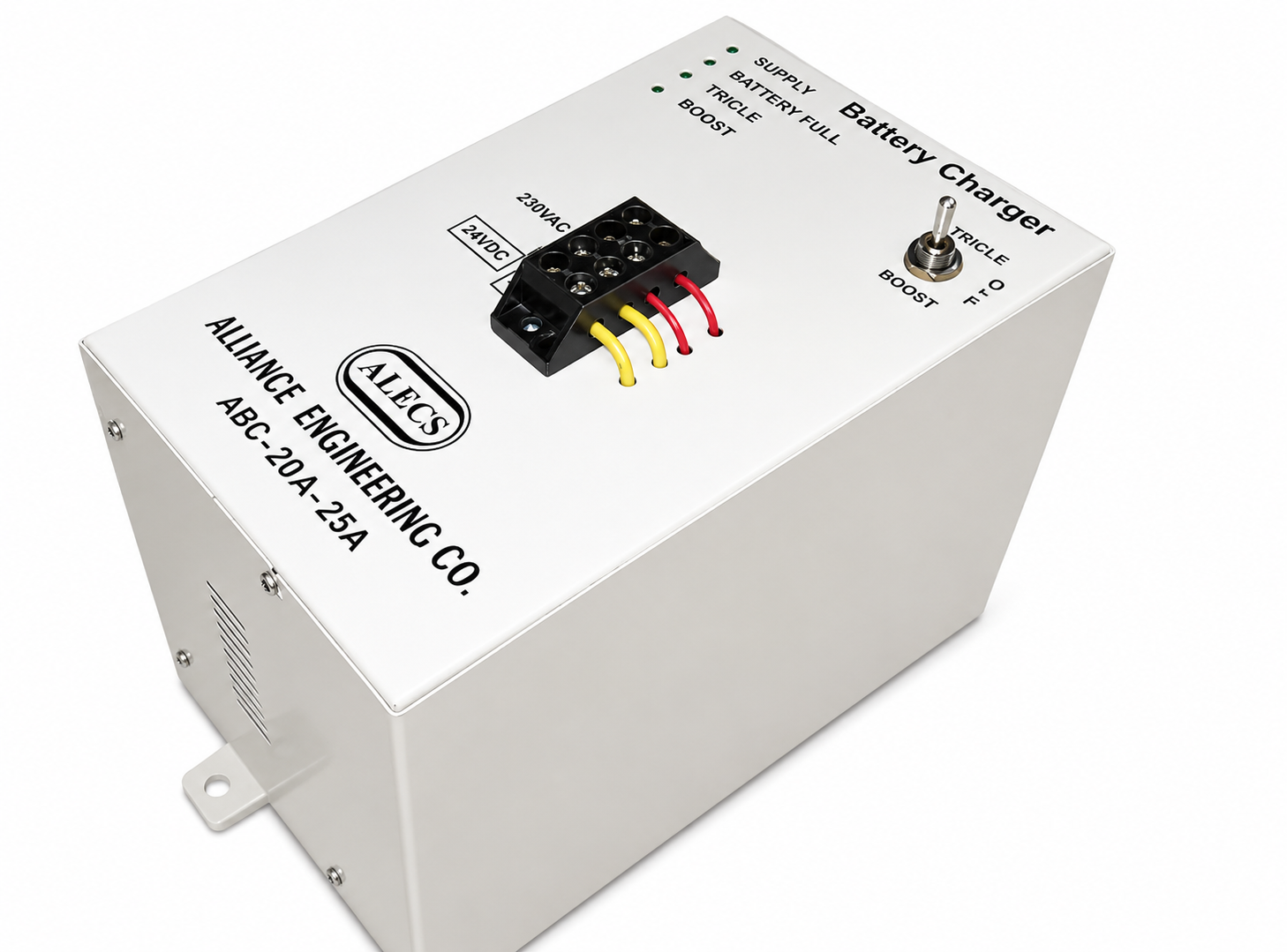
In an electrical substation, reliability is the highest priority. If a fault occurs and the main AC grid power fails, the substation's protection relays, circuit breaker trip coils, emergency lighting, and telemetry systems must remain functional.
To ensure continuous operation, every substation relies on a stationary battery bank that provides a dedicated DC power supply. The heart of this backup system is the Float-Cum-Boost Battery Charger (FCBC).
In this article, we explain how an FCBC system works, its dual-mode charging logic, and why it is indispensable for modern grids.
1. What is an FCBC System?
A Float-Cum-Boost Battery Charger is an industrial-grade rectifier system that converts AC grid power into stabilized DC power. It serves a dual purpose:
- Powering the DC Load: It continuously supplies DC current to the substation's control panels, protection relays, and indicators.
- Maintaining the Battery: It keeps the connected lead-acid or nickel-cadmium battery bank fully charged so it is ready to step in instantly if AC power fails.
2. Float Charging vs. Boost Charging Modes
An FCBC operates in two distinct modes to optimize battery life and ensure continuous power:
A. Float Mode (Normal Operation)
Under normal conditions, the charger operates in Float Mode.
- Purpose: It supplies the nominal continuous DC load of the substation and provides a trickle charge to the battery bank to compensate for self-discharge.
- Voltage: The charger maintains a constant voltage just above the battery's nominal voltage (typically around 2.15V to 2.25V per cell for lead-acid batteries).
- Current: The current is low, keeping the batteries in a fully charged state without overcharging or causing water loss.
B. Boost Mode (Post-Discharge Recovery)
If the substation suffers an AC power failure, the battery bank discharges to run the protection systems. Once AC power is restored, the charger switches to Boost Mode.
- Purpose: To recharge the battery bank as quickly as possible.
- Voltage: The charger increases the voltage to a higher level (typically 2.3V to 2.4V per cell).
- Current: The charger supplies a higher current (constant current phase) until the batteries reach approximately 80-90% state of charge, then transitions back to Float Mode.
3. Automatic Changeover Logic
Older substation battery chargers required operators to manually flip switches to change between Float and Boost modes. Modern FCBC systems are fully automated:
- Battery Sensing: The system continuously monitors the battery voltage and charging current.
- Auto-Boost Trigger: If the battery current demand exceeds a set limit (e.g., after an outage), the controller automatically initiates Boost Mode.
- Auto-Float Transition: Once the battery charging current drops to a pre-defined threshold (indicating the batteries are nearly full), the system seamlessly returns to Float Mode to prevent overcharging.
4. Key Substation Integration Requirements
For reliable substation installation, an FCBC system must meet several industrial standards:
- Ripple Filtration: The DC output must have extremely low AC ripple (typically < 1% RMS) to prevent damage to sensitive digital microcontrollers inside protection relays.
- Redundancy (Dual Chargers): High-reliability systems often use a Dual FCBC configuration (either Float + Float/Boost or main/standby) to guarantee backup even if one charger fails.
- Alarm Indications: The system must include diagnostic indicators for AC Under/Overvoltage, DC Overvoltage, Earth Faults, and Charger Fail conditions, connected to the central SCADA system.
Conclusion
An automatic Float-Cum-Boost Battery Charger is the silent guardian of substation power supply. By automating the charging cycle, it ensures that the batteries are always prepared to handle emergency trips while maximizing battery lifespan.
At Alliance Engineering, we manufacture custom industrial battery chargers in Chandigarh fully compliant with IS 8320, featuring thyristorized (SCR) control, digital telemetry, and customized mimic layouts. Contact our engineers at info@allianceengineeringco.com for design specifications.