Class 0.5 vs. Class 0.5S: What Does the 'S' Mean in Current Transformer Metering?
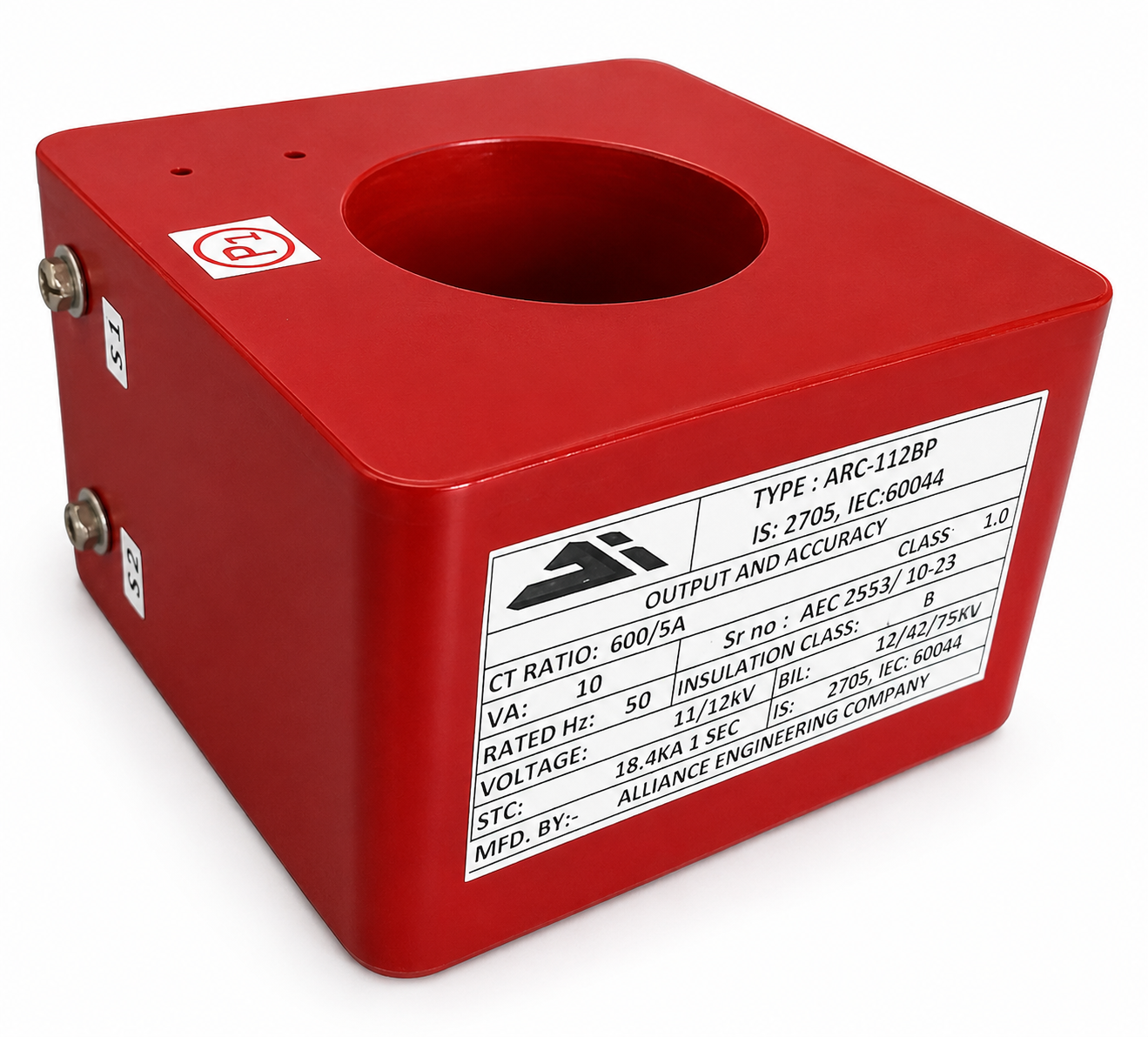
When specifying current transformers (CTs) for commercial billing, industrial energy audits, or solar grid connections, you will frequently see two options: Class 0.5 and Class 0.5S.
While both classes guarantee a maximum error of 0.5% at rated primary current, the "S" suffix marks a substantial difference in accuracy when the system operates at low loads.
In this guide, we explain the engineering differences, standard limits, and practical application requirements for both classes.
1. What does the "S" stand for?
The "S" stands for "Special" (or "Special Accuracy").
Standard current transformers (Class 0.5) are calibrated to be highly accurate when the electrical system runs near its designed capacity. However, if the system load drops significantly (e.g., during off-peak hours or in solar setups on cloudy days), a standard CT's accuracy degrades rapidly.
A Class 0.5S CT is manufactured using higher-grade core materials (typically high-permeability nickel-iron alloys or specialized CRGO steel) that keep the CT highly accurate even down to 1% of its rated primary current.
2. Accuracy Limit Comparison
According to IS 2705 and IEC 61869-2, the allowable percentage ratio error at different percentages of rated current is defined as follows:
| Accuracy Class | Error at 1% Load | Error at 5% Load | Error at 20% Load | Error at 100% Load | Error at 120% Load |
|---|---|---|---|---|---|
| Class 0.5 | *Not Specified* | ±1.5% | ±0.75% | ±0.5% | ±0.5% |
| Class 0.5S | ±1.5% | ±0.75% | ±0.5% | ±0.5% | ±0.5% |
Key Takeaways from the Data:
- At 20% Load: A Class 0.5S CT limits error to 0.5%, whereas a standard Class 0.5 CT allows up to 0.75% error.
- At 5% Load: A Class 0.5S CT limits error to 0.75%, whereas a standard Class 0.5 CT allows up to 1.5% error (double the error).
- At 1% Load: A standard Class 0.5 CT has no guaranteed accuracy, while a Class 0.5S CT is guaranteed within 1.5% error.
3. Why Low-Load Accuracy Matters in Modern Grids
Historically, industrial plants ran at relatively constant loads. Today, electrical loads are highly variable due to automated machinery, variable frequency drives (VFDs), and solar integration.
The Solar Net-Metering Scenario
Solar power generation peaks during midday and falls to zero at night. A billing meter equipped with standard Class 0.5 CTs will read inaccurately during early morning and late evening when generation is low. Utilizing Class 0.5S or Class 0.2S current transformers ensures every single watt of generated power is accurately measured and billed.
Commercial Real Estate & Multi-Tenant Panels
In commercial offices, electricity consumption drops to near-zero during weekends and nights (only running security systems and standby servers). A Class 0.5S CT guarantees that this low standby energy consumption is billed accurately without metering drift.
Conclusion
For standard industrial distribution panels running constant loads, Class 0.5 CTs offer a reliable, cost-effective solution. However, for utility interfaces, solar integration, net metering, and variable industrial loads, specifying Class 0.5S is essential to prevent billing disputes and energy leakage.
At our Chandigarh manufacturing unit, Alliance Engineering designs and builds custom Class 0.5S and Class 0.2S current transformers. We test each CT at multiple load levels to guarantee compliance with IS 2705 and IEC 61869-2 standards. Contact our team at info@allianceengineeringco.com for technical quotes.